
Patient Engagement, AI, Patient Voice
What happens when the insight is wrong?

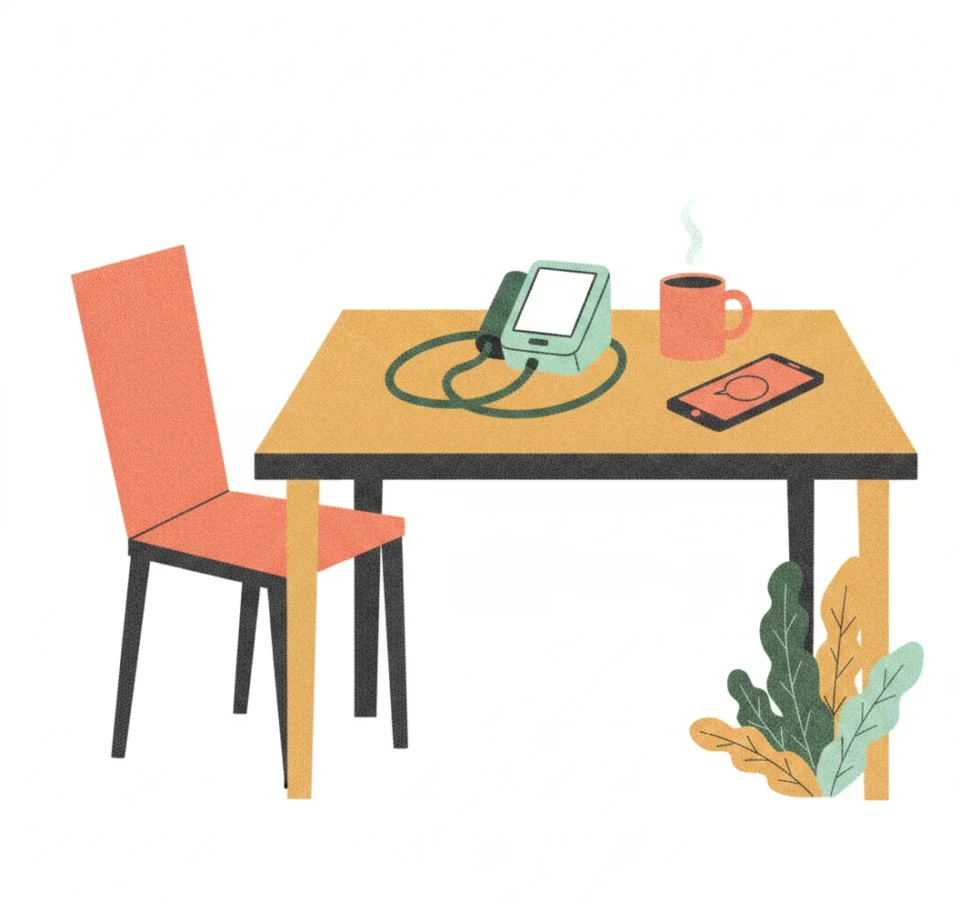
I have not really talked about this with anybody until now. I do not want to talk much about the condition itself. I want to talk about managing it, and about the technology, because over ten years those two moved at very different speeds.
My dad has suffered with high blood pressure for most of his life, for as long as I have known him. About ten years ago he asked me directly whether I had checked mine, and told me I should be aware of it. So I went home and did a cuff measurement. It came out a bit high. In fact pretty high. Later I found out I was not wearing the cuff properly, but it was still in a concerning range.
Since that moment I have been pretty conscious of blood pressure and the risks. I have swung around from normal range to slightly elevated, and never gone into the hypertension diagnosis range, fortunately. I think that is due to active measurement and control and lifestyle change.
Part of the process was turning towards technology. At the time, that meant Google. I remember asking it what hypertension is, what normal ranges are, and how to measure it. That is where I learned how to wear a cuff properly, the different types of devices, and how to do self-measurements.
At the doctor's office I would constantly get much higher measurements than at home. I later learned this was a kind of white coat syndrome. For many people, getting a measurement at the doctor's office is a stressful experience, and it increases your blood pressure at exactly that moment.
One decision I did make was to go to my GP and ask for her advice. She listened intensely, and then gave me a paper diary to fill out, with instructions to take cuff readings several times and how to do it. I was supposed to bring it back and we would have a further discussion.
By the time I got back to her, I have to say the diary was not very consistent. I had taken sporadic readings and they were all over the place. She took a quick glance at it, looking for trends, and for what I now know is called time on target. That was probably very difficult to see in readings like mine. What she could see was that the numbers were not hypertensive, so she put me in the at-risk bucket. Let's monitor this closely. Right now there is no cause for concern. You might cut back on the salt, and yes, reduce the cheese. "I know that's really hard because we're in Switzerland, but you told me you like raclette. Maybe don't eat so much of that."
What that visit also did was place a lot of stress on me. Do I need to do something or not? Is this serious or not? Sometimes I would leave the question for months, and other times I would pick it up again.
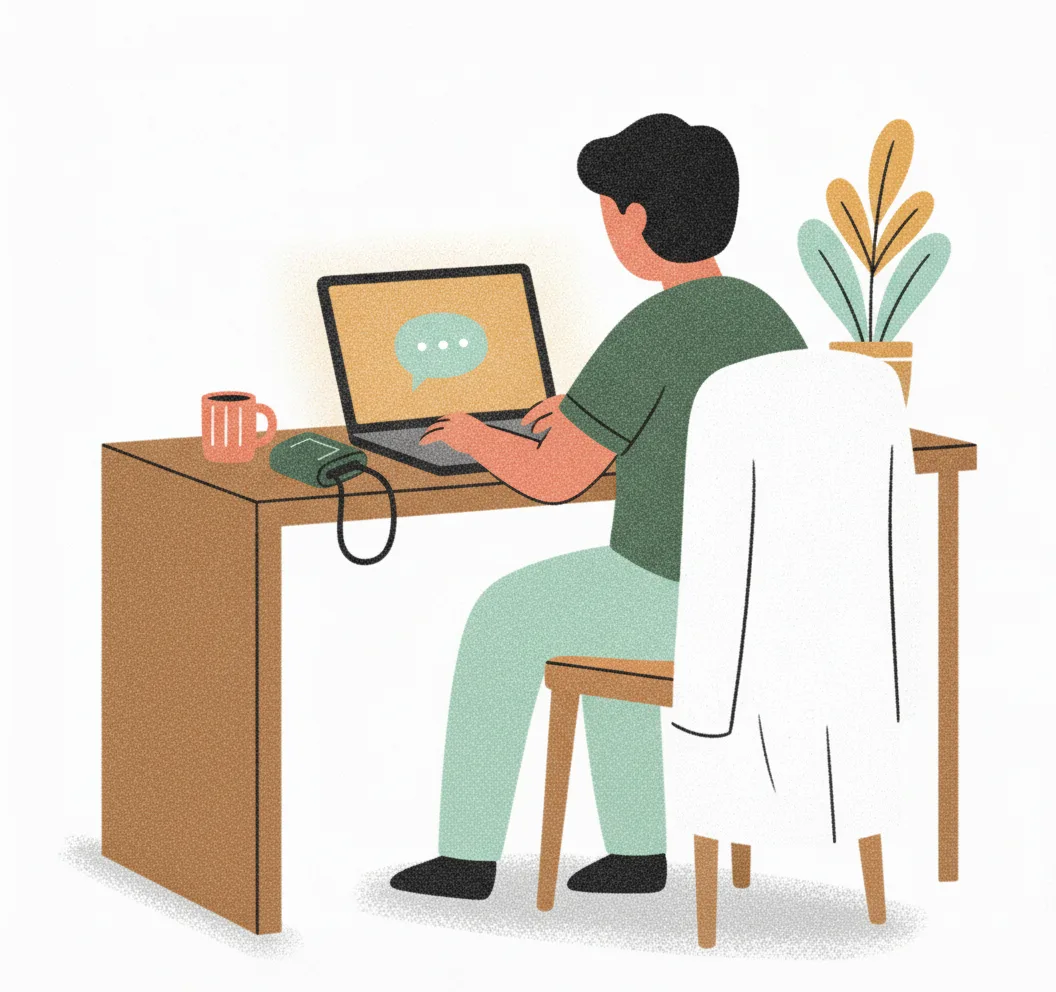
I can tell you about the day ChatGPT arrived. It was the first version I tried, and I was super excited about a chatbot that actually seemed intelligent and could hold a conversation. One of the first things I asked it about was hypertension and blood pressure management.
I got a pretty good response, but not a satisfying one. It did not explain much more than I already knew, and there were a lot of safety rails. The chatbot was hesitant to give any kind of medical advice, which is understandable. Of course there were ways around that. One of them was acting like a doctor. "I have a patient presenting with high blood pressure, these are the readings." ChatGPT would then give advice as if I were the doctor.
What came back was actually useful. It did not give many sources at the time, but it came off as very knowledgeable, and it was conversational, so I could ask about specific lifestyle changes and diets and what was relevant for me. The answers were on the level of a conversation with a GP. I remember asking my GP similar questions and getting very similar answers, which in one sense was very comforting.
Over time I got more comfortable sharing information about my health with it. That was a risky move, and I took a lot of time over the privacy settings before I felt comfortable sharing certain types of information. Then projects arrived, where you could store your documentation and health records and the chatbot could refer to them as part of its memory. I hooked up my Apple Watch data, heart rate, sleep patterns, exercise, and for the first time I could make really interesting correlations about what was driving my blood pressure changes. Sleep patterns and stress. Certain times of the day. That was enlightening, and it helped me actually make some changes to my lifestyle.
Managing blood pressure became more of a conversation than an episodic thing. Episodic meant I only did it every once in a while, when I remembered to do a cuff measurement, and even less often when I happened to have a doctor's appointment.

Meanwhile, on the clinician side, it turns out this is not so easy. In the course of "let's monitor", my GP gave up her practice and retired. I recall going to the office and asking for all my health records. She gave me a stack of papers. I remember going through them, trying to digitise them, and somewhere in the stack was my old diary of blood pressure readings. I picked it up and looked at it and thought, well, that was at least a couple of years ago. Maybe I should start again. But who to turn to? I had to find a new GP. So again I left the question unanswered.
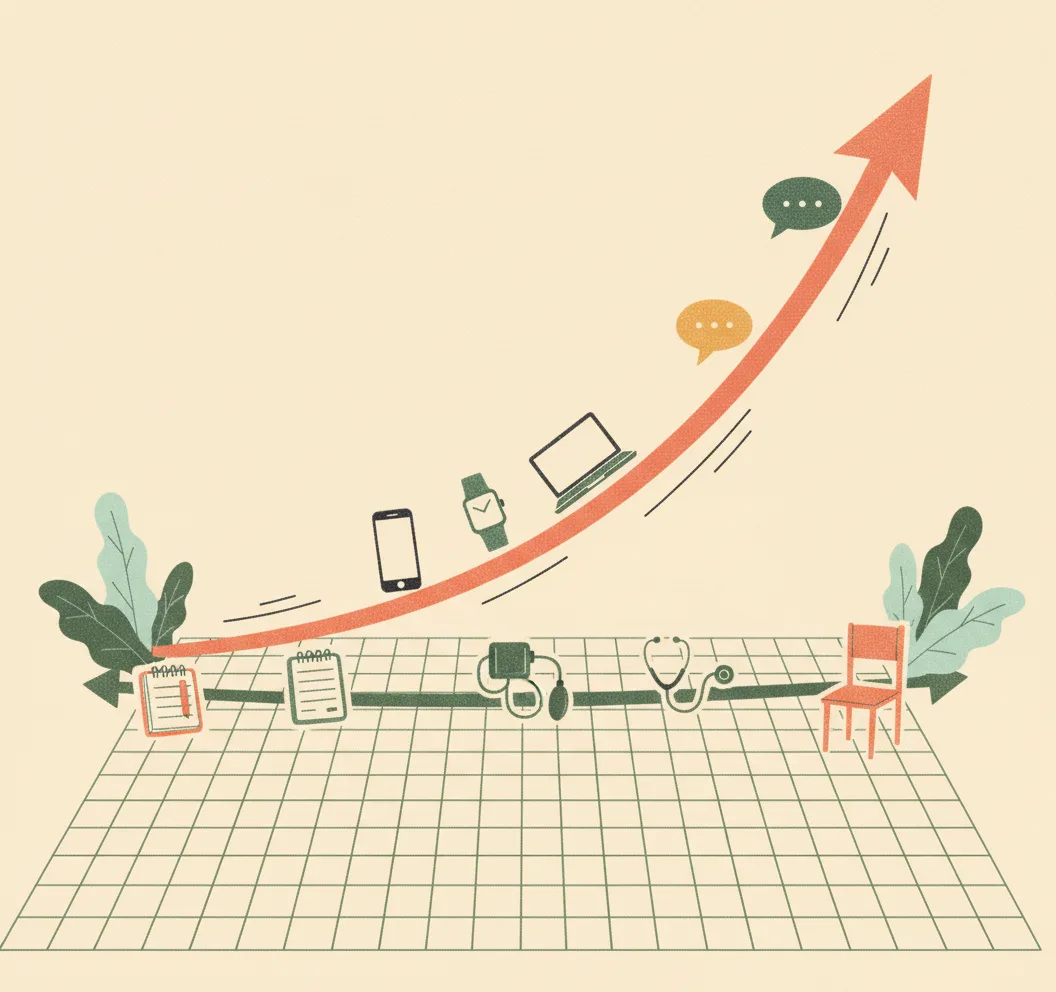
Technology and the healthcare system moved at two different speeds over those ten years. On one side, Google, and then the chatbots when they arrived, and you could do more and more with them and get more and more insight. But one thing they could not do for you is make decisions. That rested with me, and to some extent with my clinician.
And more importantly, the chatbot had no idea what was happening with my GP and her retirement. The friction points in the healthcare system, the difficulty of getting a true view of my health, the limited time to actually speak to somebody about a decision, or co-decision as they call it. None of this is documented or understood by the chatbot. In that sense it is living in a parallel world, while human interactions, human decision making, and the healthcare system as a whole drive what really shapes your patient journey.
Somewhere there is a chatbot that thinks my GP is still in practice. The white paper is about everything else it does not know.
The white paper
Lived Experience Can’t Be Prompted
The full paper: the patient accounts in a patient expert's own words, the automate-or-never table, the references and the method.

✕